Golden Circle in 3 Days:The Campervan Route Locals Actually Take
Skip the 8-hour bus-tour version. Here's how to actually slow down on the Golden Circle — with real campsites, the detours most tours skip, and Secret Lagoon and Kerið built in properly.
 This guide is built around three days, a campervan, and the assumption that you don't want to see the Golden Circle exactly the way the tour buses do. We'll cover the three classic stops (Þingvellir, Geysir, Gullfoss), the two extensions worth the detour (Secret Lagoon and Kerið crater), and the real campsites you can actually park at along the way — including a couple that most one-day guides never mention because they're simply not built for someone moving that fast.
<div class="nsr-gc-pricing-row">
This guide is built around three days, a campervan, and the assumption that you don't want to see the Golden Circle exactly the way the tour buses do. We'll cover the three classic stops (Þingvellir, Geysir, Gullfoss), the two extensions worth the detour (Secret Lagoon and Kerið crater), and the real campsites you can actually park at along the way — including a couple that most one-day guides never mention because they're simply not built for someone moving that fast.
<div class="nsr-gc-pricing-row">
Why 3 Days Beats the Day Trip
The Math Tour Buses Don't Tell You
A standard Golden Circle day tour runs 8 to 10 hours, door to door, and packs in exactly three stops: Þingvellir, Geysir, Gullfoss. That's it. You'll see the same three places as every other bus that day, at the same three parking lots, often at the same time of day everyone else arrives — late morning, when the tour buses from Reykjavík all converge at once. With three days and a campervan, none of that applies. You're not on anyone's schedule. You can hit Geysir at 7am when the only other people around are the early-rising photographers, spend a full afternoon soaking in the Secret Lagoon instead of rushing past it, and add Kerið crater and a proper hidden-gem waterfall like Bruarfoss without the trip turning into a sprint.Same Sights, No Rush
You still see Þingvellir, Geysir, and Gullfoss — just without checking your watch the entire time.Real Overnight Stops
Named, campervan-friendly campsites mean you're not driving back to the city every night.Two Extra Soaks
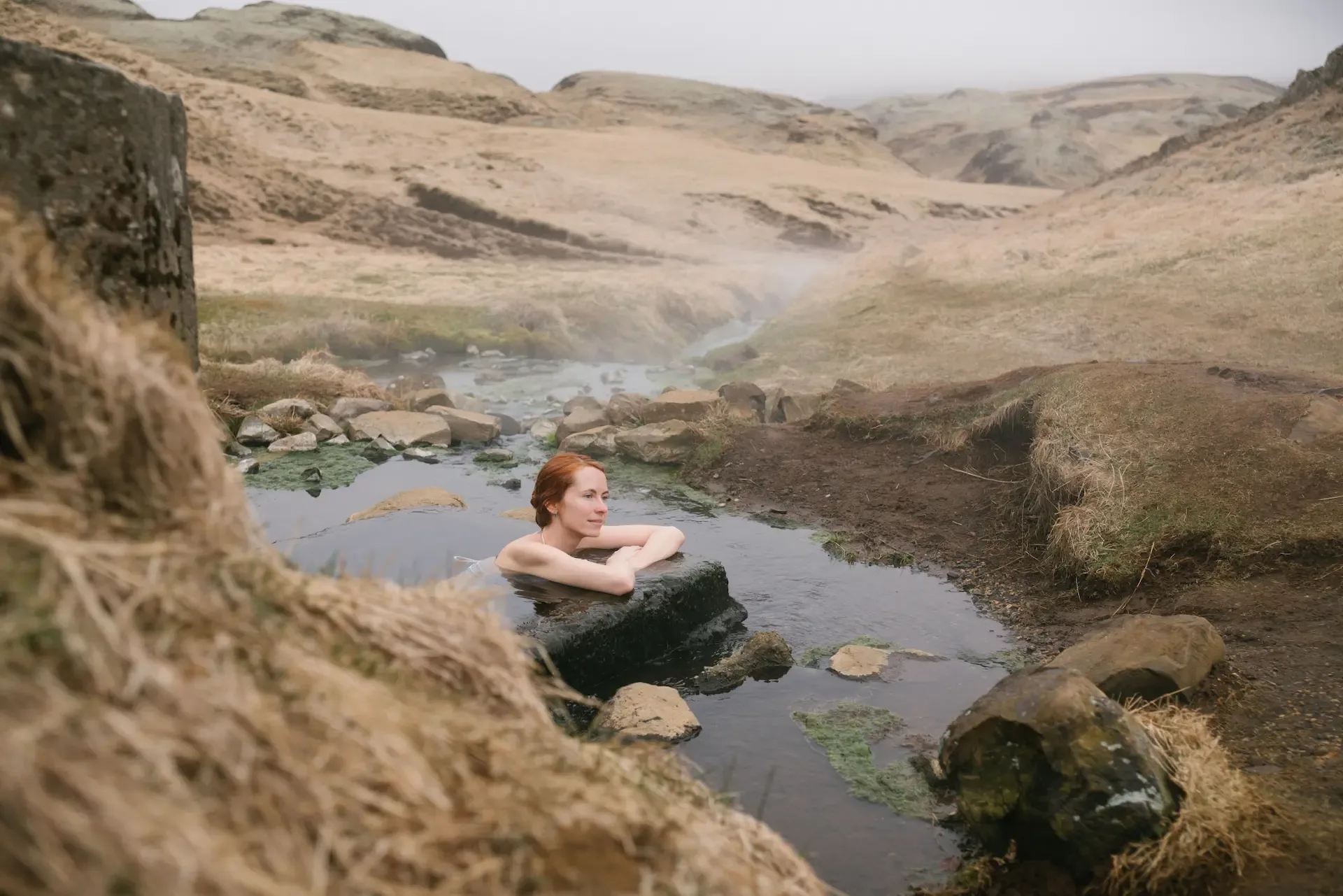
Secret Lagoon and time to actually enjoy it — not a 20-minute dip squeezed before the bus leaves.The Stops Buses Skip
Bruarfoss, Faxi, and quieter corners of Kerið that day-trippers simply don't have time for.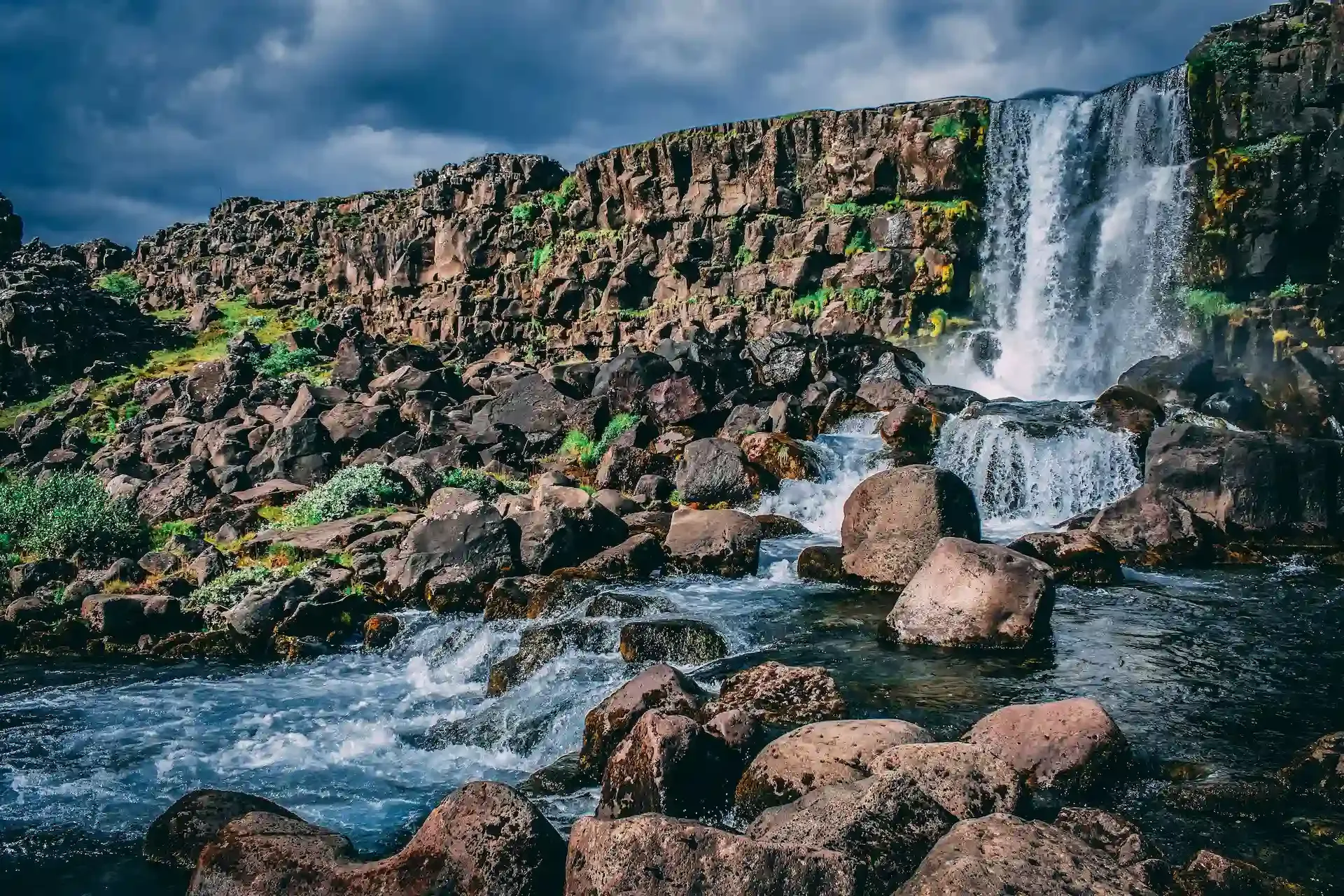
Best Campervan for the Golden Circle in 3 Days
The Golden Circle's main roads — Route 36, 37, and 35 — are fully paved, which means you don't need anything special to drive this route. What you do want is a van that keeps you warm and charged through three nights, since temperatures drop fast after dark even in summer.| Feature | Premium 2 Campervan | Trafic 3 Campervan |
|---|---|---|
| Best for | Couples or two friends | Three travelers or small families |
| Price from | €109 / day | €129 / day |
| Transmission | Automatic | Manual |
| Heating | Quiet thermostat diesel heater | Webasto diesel heater |
| Power system | ~1 kWh off-grid power | ~1 kWh off-grid power |
| Golden Circle roads | Fully suitable, 2WD | Fully suitable, 2WD |
Day 1: Þingvellir to Reykholt
Reykjavík → Þingvellir → Reykholt
Leave Reykjavík mid-morning and take Route 36 northeast — it's about 45 minutes to Þingvellir National Park, the first and most historically important stop on the loop. This is where Iceland's parliament met from 930 AD, and it's also where you can physically walk between the North American and Eurasian tectonic plates in the Almannagjá Gorge. Give yourself at least two hours here; rushing it is the single most common Golden Circle regret. From Þingvellir, continue toward Laugarvatn and on to Reykholt, a small village right in the heart of the Golden Circle on Route 35. This is your first overnight stop.- Þingvellir National Park — rift valley walk, Öxarárfoss waterfall, Silfra fissure viewpoint
- Laugarvatn — quick stop, optional soak at Fontana if you want a preview before Secret Lagoon tomorrow
- Reykholt Campsite — overnight, hot showers, indoor kitchen
Day 2: Geysir, Gullfoss & Secret Lagoon
Reykholt → Geysir → Gullfoss → Secret Lagoon → Flúðir / Reykholt
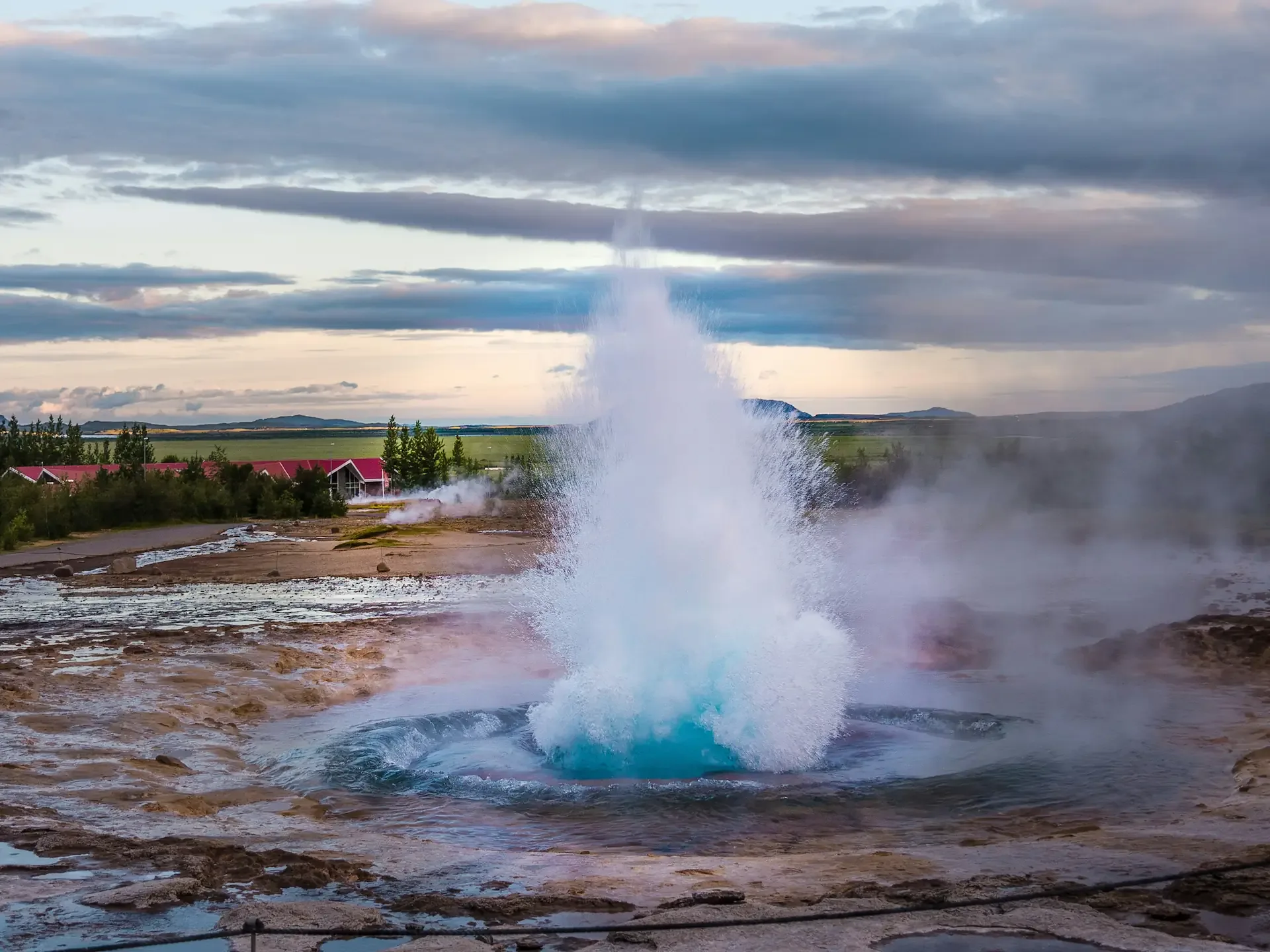
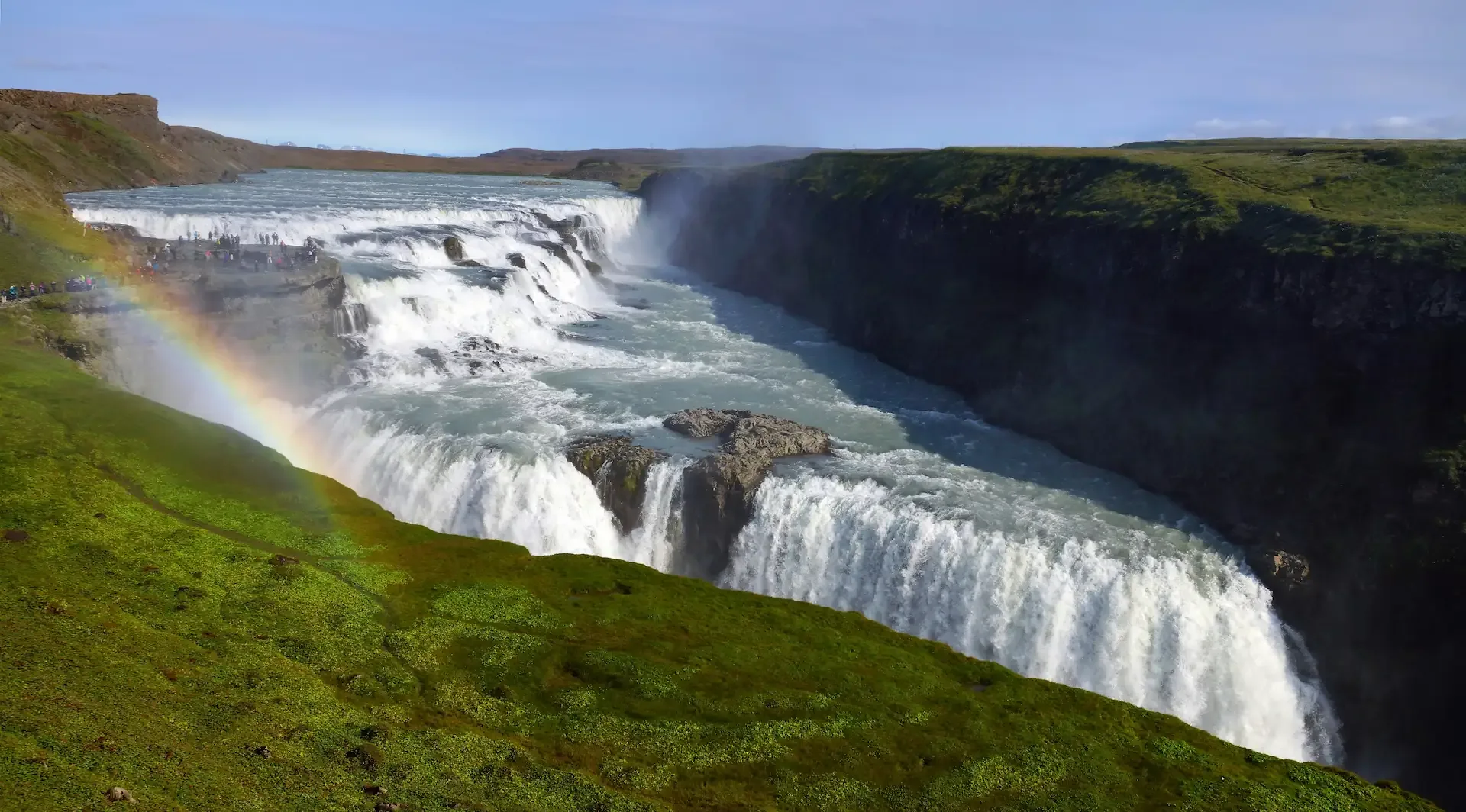
From Reykholt, it's a short drive to the Geysir geothermal area. Get there early if you can — Strokkur erupts every 5 to 10 minutes, reliably, but the early morning crowd is a fraction of the midday one. From Geysir, continue a few minutes further to Gullfoss, Iceland's "golden waterfall," where two tiers drop into a canyon that bends the river a sharp 90 degrees. In the afternoon, double back toward Flúðir for the Secret Lagoon — Iceland's oldest swimming pool, fed by natural hot springs, and a far less commercial experience than the Blue Lagoon. This is the stop most one-day tours either skip or rush through in 20 minutes. With three days, you don't have to.- Geysir Geothermal Area — Strokkur eruptions, steam vents, sinter terraces
- Gullfoss Waterfall — upper and lower viewing paths, dress for spray
- Secret Lagoon, Flúðir — natural hot spring pool, far quieter than Blue Lagoon
- Overnight back near Reykholt, or push on toward Borg Campsite in Grímsnes
Day 3: Kerið & the Road Back
Borg / Reykholt → Kerið Crater → Reykjavík
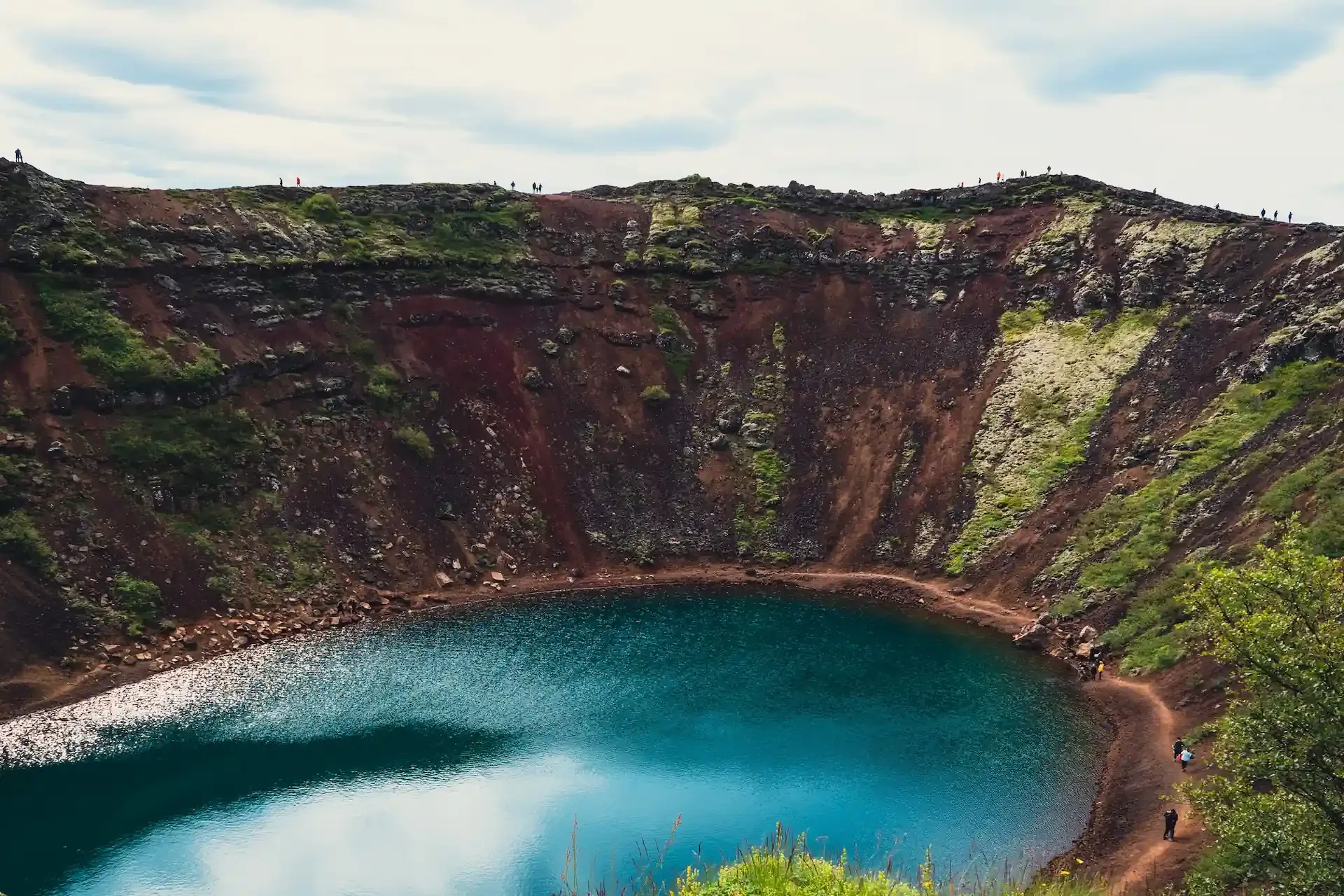
Your last day is the easiest, and arguably the most photogenic. Kerið is a volcanic crater roughly 3,000 years old, with a striking red slope cradling a blue-green lake at the bottom — it photographs like nowhere else on the route. It's a quick stop, 15 to 20 minutes, but worth building your morning around since light changes the crater's colors dramatically depending on the hour. From Kerið, it's a straightforward drive back toward Reykjavík — or, if you have more days, a natural jumping-off point toward the South Coast.- Kerið Crater — red volcanic slopes, blue-green crater lake, small entry fee
- Optional: Faxi waterfall on the way back — quiet, easy, almost always empty
- Return to Reykjavík, or continue toward the South Coast if extending the trip
Real Campsites on the Golden Circle Route
Most Golden Circle content lists attractions and leaves the camping logistics vague. Here are the actual campsites worth knowing by name, based on driving this route ourselves.Reykholt Campsite
About 100 meters off Route 35, right in the heart of the loop. Hot showers, indoor kitchen, dining room, and walking distance to a swimming pool and Friðheimar. Easily the most central base for this route.Borg Campsite
A quieter village-based stop in Grímsnes, closer to Kerið crater. Good option if Reykholt is full or you want a different overnight rhythm on Day 2 or 3.Skógafoss Campsite
Not technically inside the Golden Circle loop, but a natural extension if you're continuing toward the South Coast. Crowded by Icelandic standards — but the views right from your pitch are some of the best on this entire itinerary.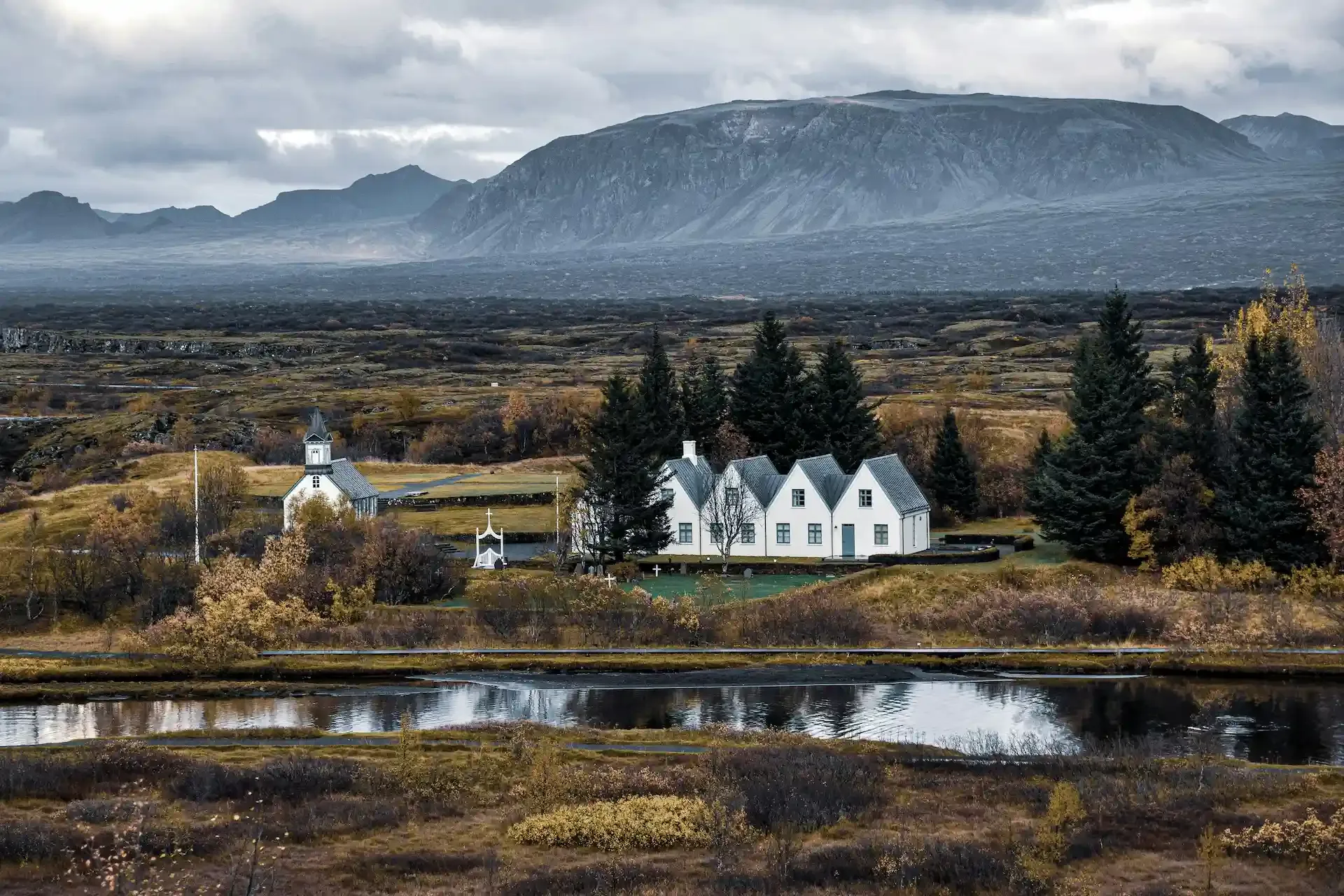
Why the Golden Circle Terrain Changes So Fast
This is the part that surprises people most, even after they've seen the photos. The Golden Circle sits on the boundary between the North American and Eurasian tectonic plates, which is part of why the landscape shifts so dramatically over such short distances. You'll drive through green farmland, then suddenly you're on a moonscape of moss-covered lava, then steam is rising out of the ground at Geysir like the earth itself is breathing, then you're standing at the edge of a canyon carved by a glacial river at Gullfoss. The weather moves just as fast as the terrain. It's entirely normal to leave Reykjavík under clear skies, hit driving rain at Þingvellir forty minutes later, and have the sun back out by the time you reach Geysir. None of this is unusual here — it's simply how this part of Iceland works, and it's part of why driving it yourself, at your own pace, is so different from being shuttled through it on a bus schedule. What's easy to miss in the rush of sightseeing is just how untouched most of this landscape still is. Iceland is one of the few places left where you can watch the raw force of geology — volcanic, glacial, geothermal — actively shaping the land in front of you, largely without human interference rerouting or rebuilding around it. That's part of what makes the Golden Circle worth slowing down for.Driving the Golden Circle Safely
The good news: this is one of the easiest routes in Iceland to drive yourself. Routes 36, 37, and 35 are paved and well-maintained year-round, and you don't need a 4x4 for any part of the standard loop.- Check road.is before driving in winter — conditions can change overnight.
- Check vedur.is for wind warnings, especially when opening campervan doors in open parking areas.
- Winter tires are required October through April; rental campervans come fitted appropriately for the season.
- Daylight in December can be as short as 4–5 hours — plan stops accordingly if visiting in winter.
- Parking at Þingvellir and Geysir costs roughly 1,000 ISK per car — keep cash or card ready.
What to Pack for a 3-Day Golden Circle Trip
- Waterproof jacket and trousers — weather can flip in under an hour.
- Swimsuit and towel — you'll want both Fontana and Secret Lagoon access.
- Warm layers, even in summer — evenings cool fast once the sun dips.
- Cash or card for small parking fees at Þingvellir and Geysir.
- A reusable water bottle — Iceland's tap water is some of the cleanest anywhere.
- Camera or phone with spare battery — cold weather drains batteries faster than usual.
A Campervan Built for This Route
Heating, off-grid power, and a real kitchen — everything you need for three relaxed days on the Golden Circle, included as standard. Check availability and datesWhat Travelers Say About Foxie Campers
"We only planned one day for the Golden Circle and ended up staying three because of how easy the campervan made it. Reykholt campsite was perfect as a base — clean, central, and the kitchen was great after a long day."
"Secret Lagoon was the highlight of the whole trip and we almost skipped it. Glad we had the extra days to fit it in properly instead of rushing."
"The van was warm every night even with the temperature dropping fast after sunset. Foxie Campers gave us solid campsite tips before we even left the office."
Frequently Asked Questions
Is 3 days enough for the Golden Circle?
What is the best campsite on the Golden Circle?
Can you do the Golden Circle in a campervan?
Do I need a 4x4 for the Golden Circle?