


You can see the northern lights in Iceland on any dark, clear night from late August to mid-April. Your best chances are from September to March, roughly between 22:00 and 02:00, on a night with little cloud and some activity on the Sun. No night is guaranteed, but if you give yourself several nights and stay flexible about where you go, the odds are good.
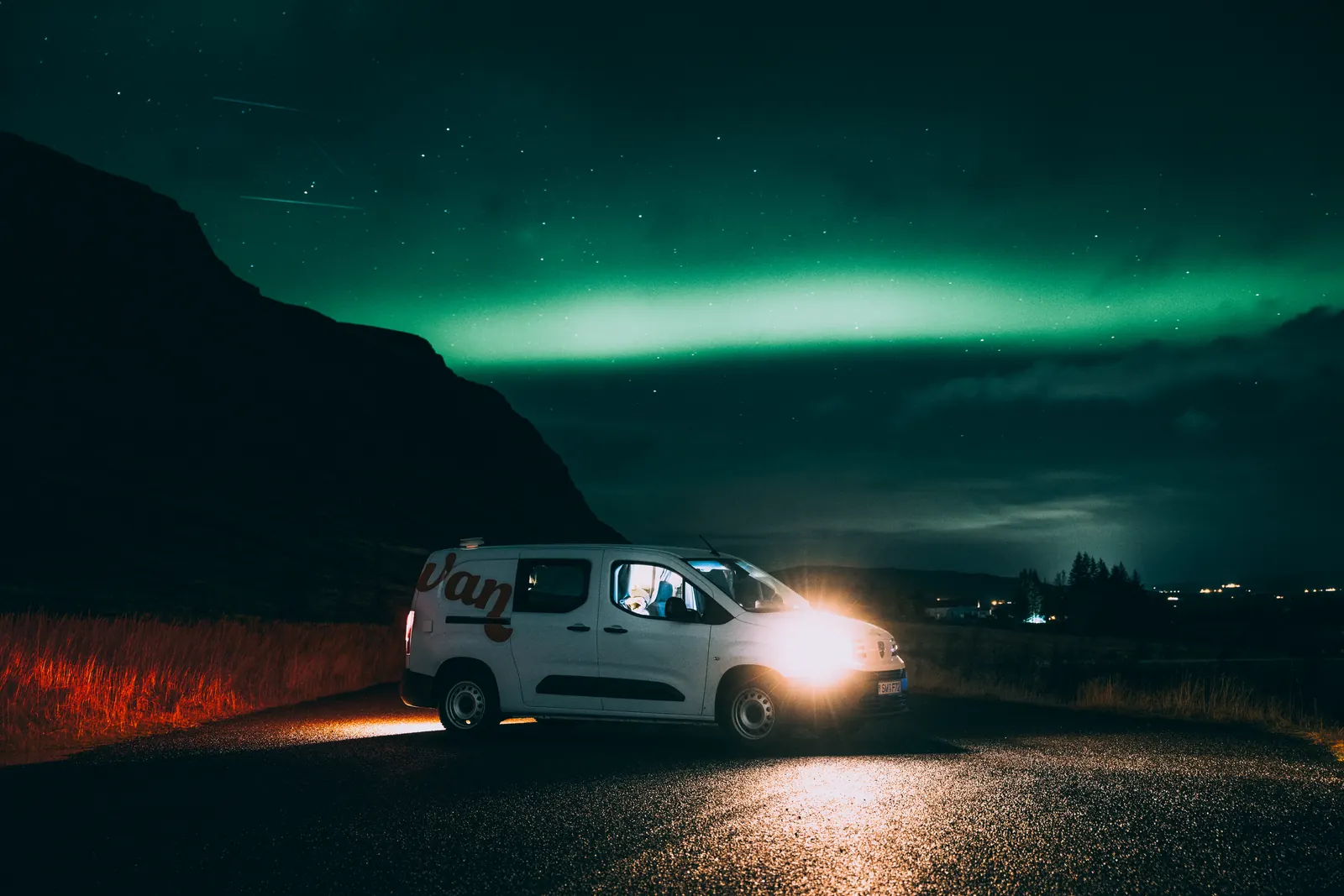
The short answer
- Season: late August to mid-April. From late May to early August it never gets dark enough, even when the aurora is active.
- Best months: September to March. September, October, February and March give you dark nights plus more daylight and easier roads for driving.
- Best hours: about 22:00 to 02:00, but a display can start as soon as it is fully dark.
- What you need: darkness, a clear sky and some solar activity. Cloud is the most common reason people miss it.
- Best nights: the week around the new moon, away from town lights.
The best months to see the northern lights in Iceland
Iceland sits right under the auroral oval, the ring around the North Pole where the northern lights happen most often. The aurora is up there all year. What changes through the year is how dark the nights are, and how often the sky is clear.
| When | Darkness | What to expect |
|---|---|---|
| Late August to September | Dark from late evening | The first displays of the season, mild weather and long days for driving. Highland roads start to close for the winter. |
| October | Long nights | Often a strong month, with autumn colours by day. The first storms of the winter arrive. |
| November to January | The longest nights, with about 4 to 6 hours of daylight around the turn of the year | The most hours of darkness, but also the most storms and cloud. Driving days are short. |
| February to March | Long nights and fast-growing days | A favourite with photographers: dark nights, more daylight for driving and often clear, frosty spells. |
| Early to mid-April | Nights get short fast | The last chances of the season, late at night. |
Displays are also a little more frequent around the spring and autumn equinoxes, in March and September, because of how the Earth is tilted towards the solar wind. If you can choose, September–October and February–March are the best balance of dark skies and comfortable travel.
The best time of night
Most people see the lights between about 22:00 and 02:00, with the strongest displays often around midnight. But the aurora comes in waves: a quiet glow can turn into moving curtains for 10 to 30 minutes and then fade again. On a promising night, go out as soon as it is fully dark and check the sky every half hour instead of waiting for one perfect moment.
How to read the aurora forecast
Two forecasts matter: cloud and activity.
- Cloud cover: the Icelandic Met Office's aurora forecast on vedur.is shows a cloud map of the whole country, hour by hour. This is the most useful forecast: find the clear areas within a sensible drive.
- Activity: the same page gives an activity level from 0 to 9. In Iceland even low levels can give a visible display on a clear, dark night. Higher levels mean brighter, faster and more widespread lights.
- Live space weather: NOAA's Space Weather Prediction Center and aurora apps show the Kp index and the solar wind in real time. A sudden jump is a good reason to look up.
A clear sky beats a high number: a night at level 2 with no cloud usually beats level 5 under thick cloud.
The moon and the Sun's cycle
A full moon lights up the snow and washes out faint auroras, although strong displays still show clearly. The darkest week is the one around the new moon, so check the moon phase when you pick your dates.
The Sun also has an activity cycle of about 11 years. The last peak came in 2024 and 2025, and the years just after a peak still bring frequent strong displays, so the coming winters are still a good time to go.
Where to watch near Keflavík Airport
Our desk is in Keflavík, about 7 minutes from the airport, and the Reykjanes peninsula around it is one of the easiest places in Iceland to see the aurora on your first night: little light pollution, open views north over the sea, and no long drive after your flight.
- Garðskagi lighthouse, about 15 minutes from Keflavík: wide views north over the sea. The campsite next to it is listed as open all year on our campsite map.
- Sandgerði and Vogar: small towns with campsites listed as open all year, a few minutes from dark sky.
- Reykjanes lighthouse (Reykjanesviti), about 25 minutes from Keflavík: a dark, rugged corner of the peninsula. Park in the car park. Check safetravel.is for any volcanic activity on the peninsula first.
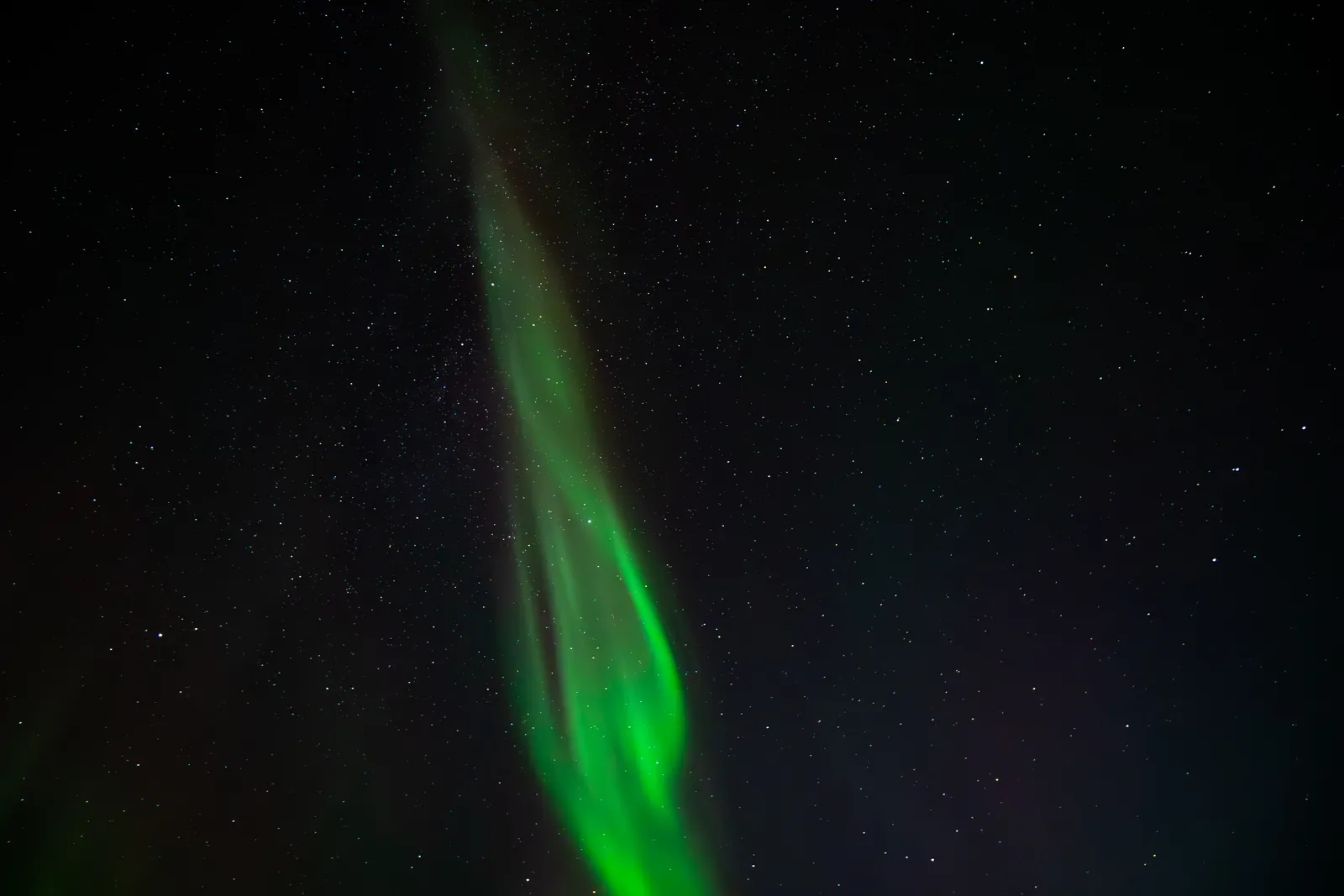
Around the rest of the country, good dark bases are Þingvellir National Park, the south coast campsites at Skógar and Hellishólar, Skaftafell, and Höfn with Vestrahorn nearby. In the north, Mývatn and the countryside outside Akureyri are dark and often clear when the south is cloudy. Our Iceland campervan map shows the campsites that stay open in winter.
Never stop on the road or the road shoulder to watch. Pull into a proper car park or lay-by and turn your lights off once you are parked. At night, sleep only at campsites.
Why a campervan makes aurora hunting easier
- You sleep where it is dark, instead of driving back to a hotel in town at 1 am.
- You decide each afternoon where to go by following the cloud map.
- You step outside when the lights start and back in to warm up. Most of our campers have a diesel night heater that runs without a campsite hook-up.
- Every Foxie camper runs on studded tyres in winter, and our desk is staffed 24/7, so a late arrival is no problem.
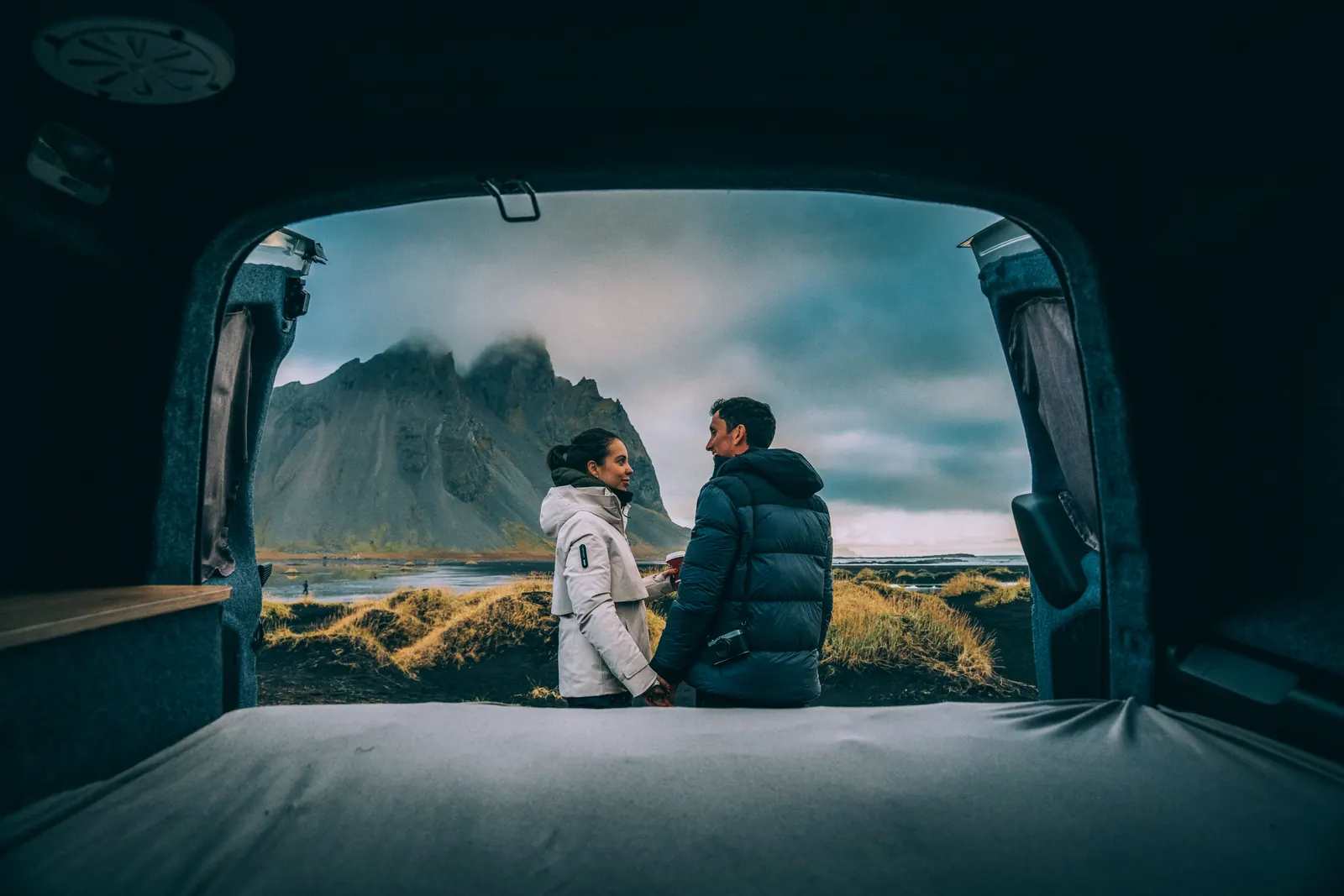
Compare campers and live prices on our Iceland campervan rental page.
How to photograph the northern lights
- Phone: use night mode, rest the phone on something steady and keep still for the whole exposure. Newer phones pick up colours your eyes can barely see.
- Camera: tripod, manual focus at infinity, your widest aperture (f/1.8 to f/2.8), ISO 1600 to 3200 and 5 to 15 seconds. Use shorter exposures when the lights move fast.
- Batteries: they drain fast in the cold. Keep spares in an inside pocket.
- Light: switch off headlights and use a red headlamp, so your eyes, and everyone else's, stay used to the dark.
Stay safe on aurora nights
- Before you set off, check wind warnings on vedur.is and road conditions on road.is.
- Dress for standing still: wool layers, a windproof jacket, hat and gloves. Nights by the sea feel much colder than the number on the thermometer.
- Car parks and paths are often icy. Simple ice cleats (microspikes) make a big difference.
- Do not walk along roads in the dark.
- In an emergency call 112. The 112 Iceland app can send your location.
Plan your aurora trip
Travelling in the darkest months? Read our guides to Iceland in November, December and February by campervan, and our winter campervan guide. To compare the seasons, see the best time to visit Iceland. Every booking comes with our free trip planner to plan your days around the dark nights.