


Most visitors arrive unsure whether they can really drink the tap water in Iceland. Locals don't think twice about it. Cold tap water here is groundwater and spring water that has filtered through lava rock for years, and almost all of it reaches the tap without any treatment at all. Drinking it is the easiest way to save money and skip plastic bottles on your trip.
There are only three things to know: drink from the cold tap, don't drink the hot water, and be choosy about streams. The rest of this guide explains why, and where to refill when you travel by campervan.
What bottled water costs you
A 500 ml bottle of water costs around 350 to 450 ISK in Iceland. Two bottles a day for two people over a ten-day trip comes to 14,000 to 18,000 ISK, for water that's no better than what comes out of the cold tap for free.
Bring a reusable bottle each and keep that money for food or a hot pool. For the rest of the shopping, our guide to Bónus covers the cheapest supermarket, and our trip cost guide adds up fuel, campsites and food.
Why the tap water is safe to drink
Iceland's cold water starts as rain and snow. It sinks into porous lava rock and moves slowly underground, sometimes for decades, and the rock filters it on the way. Towns pump it from protected springs and boreholes, away from farms and roads.
About 95% of the country's drinking water is groundwater like this, and most of it isn't chlorinated or treated, because it doesn't need to be. Water suppliers test it regularly. That's why it tastes of nothing at all.
Hot water and cold water are not the same
The first time you turn on a hot tap in Iceland, you may notice a smell of eggs. That's sulfur from geothermal water. It's normal here and has nothing to do with hygiene.
Drink from the cold tap only
In much of Iceland the hot water comes from geothermal boreholes and is meant for heating and washing. It's fine for a shower, but it carries minerals and that sulfur smell, so don't drink it or cook with it. For a hot drink, heat cold water in a kettle.
| Cold tap water | Hot tap water | |
|---|---|---|
| Where it comes from | Springs and protected groundwater | Geothermal boreholes |
| Taste and smell | Fresh and neutral | Minerals and a smell of sulfur |
| Use it for | Drinking and cooking | Showers, washing up and heating |
Let the cold tap run for a few seconds
If someone has just used the hot water, the first cold water out of a mixer tap can be warm and smell faintly of sulfur. Turn the tap fully to cold and let it run until it's properly cold, then fill your bottle.
Where to refill on a campervan trip
- Campsites: campsites have cold drinking water, at the sinks or at an outdoor tap. This is also where you fill the camper's water tank. In winter some outdoor taps are shut off because of frost, so fill up indoors.
- Swimming pools: almost every town has one, with cold taps in the changing rooms.
- Fuel stations, cafés and restaurants: the cold tap in the washroom is drinking water, and restaurants bring tap water to the table for free.
- Hotels and guesthouses: the cold tap in the bathroom is the same drinking water.
Drinking from streams
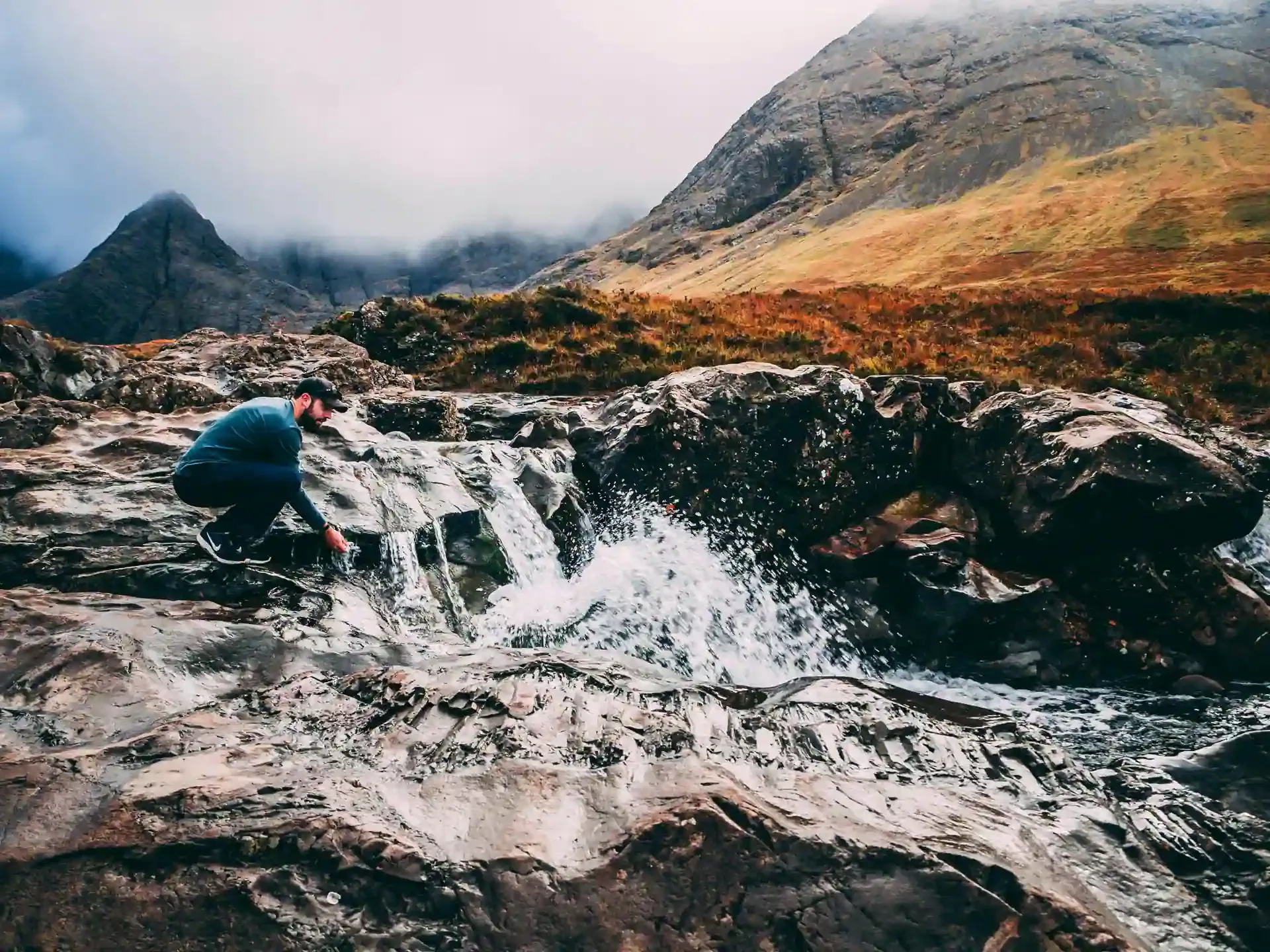
Many Icelanders drink from mountain streams, and a clear, fast-running stream high above any farm is usually fine. Don't drink below fields with sheep or horses, from still water, or from a stream you can't see the source of. If you're not sure, wait for the next tap.
Where not to drink the water
- Hot springs and geothermal pools: they're for bathing. The water is full of minerals and sometimes bacteria.
- Milky grey glacial rivers: the colour is fine rock dust from the glacier. It's gritty and not for drinking.
- Ponds and standing water: anything that doesn't move can carry bacteria.
- Hoses at car parks and car washes: they may not be drinking water. Use a tap that's marked or one inside a building.
Try it against a bottle
If you're still not convinced, pour a glass from the cold tap and one from a bottle, let them reach the same temperature and taste them without looking. Most people can't tell which is which.
Less plastic, less to carry
One refillable bottle each replaces dozens of plastic ones over a trip, and you don't have to find space for them in the camper or a bin to put them in afterwards. It's what people who live here do.
Related guides
Official information
- MAST, the Icelandic Food and Veterinary Authority, which oversees drinking water quality
- SafeTravel for conditions on your route